
Yihao Classroom
What is the relationship between butter, ghee, and cream?
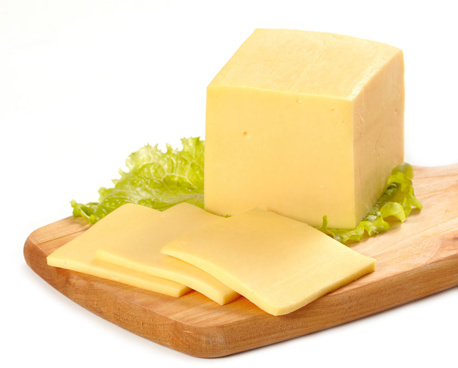
Speaking of butter, everyone is familiar with it. Even if you haven't seen butter, you've eaten various butter breads and butter cookies. However, many people don't know that butter is actually a dairy product.
Butter (butter) is called cream in Taiwan and ghee in Hong Kong. According to the national standard for food safety in China, butter corresponds to butter or cream, while cream corresponds to light cream.
The History of Butter: Edible and Usable
Butter is also a food with a long history. The earliest record of butter can be traced back to a limestone tablet 4500 years ago, which depicts the production process of butter at that time. In addition to being used as food, due to its rarity and the sense of purity it gave people, it has been used in many cultures in religious ceremonies.
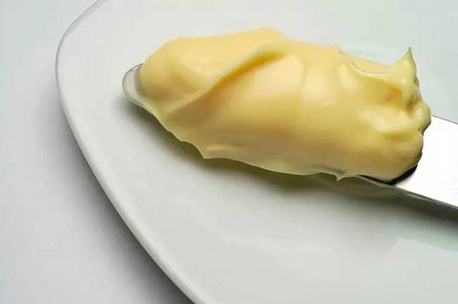
The historical uses of butter are comparable to a panacea, widely used by people all over the world in all aspects of daily life. The ancient Greeks and Romans used butter as a "night cream" applied to the skin and as "hair wax" applied to the hair to achieve a beauty effect of "oily hair and powdery face." The ancient Egyptians used butter as a medicine to treat eye infections and applied it to the skin to treat skin infections and burns. Scandinavians believed that eating butter could prevent kidney and bladder stones. There is also an old custom in Britain of giving a pot of butter to newlyweds to bless them with many children and happiness.
Initially in Europe, butter was considered something only barbarians ate by the ancient Romans and Greeks. It wasn't until after the fifteenth century that butter slowly underwent a magnificent transformation, becoming a symbol of wealth and luxury. This transformation did not last long. With the development of industrialized production after the Industrial Revolution, the production efficiency of butter was improved, and the production cost was greatly reduced. Butter, which was originally a luxury, gradually appeared on the tables of ordinary people.
In addition, many artists now use butter as a raw material to create works of art.
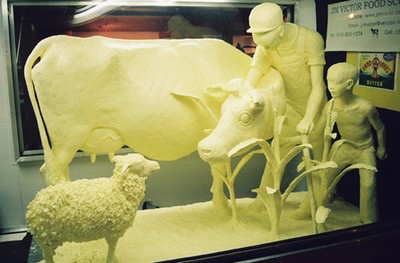
Butter Sculpture: Farm Life
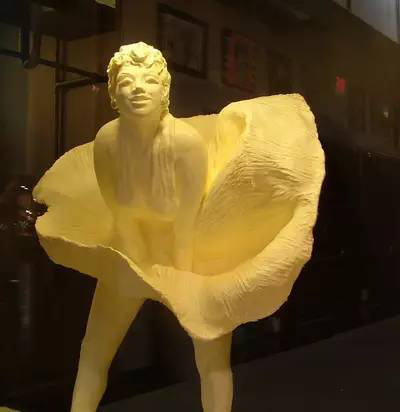
Butter Sculpture: Marilyn Monroe
What is the relationship between light cream and butter? So how is butter produced?
Milk is an emulsion containing about 3.6% fat. These fats are dispersed in the milk in the form of small fat globules, which are very small in diameter, usually between 0.1 and 20 micrometers. Why don't these small fat globules aggregate together to cause the milk to stratify? This has to do with the composition of milk fat: more than 98% of milk fat is neutral fat, mainly triglycerides, and the remaining less than 2% is polar fat, mainly phospholipids. The innermost part of these small fat globules is hydrophobic triglycerides, and the triglycerides are surrounded by a membrane composed of phospholipids and proteins. The hydrophobic side of this membrane is against the hydrophobic triglycerides, while the hydrophilic side is exposed to the outside, allowing these small fat globules to exist relatively stably in the milk without aggregating with each other.
However, although the fat globules do not fuse and aggregate, their density is still slightly smaller. Therefore, if the milk is left for a long time, the fat will slowly float to the top. Using this density difference, we can separate the milk into light cream and skim milk by centrifugation.
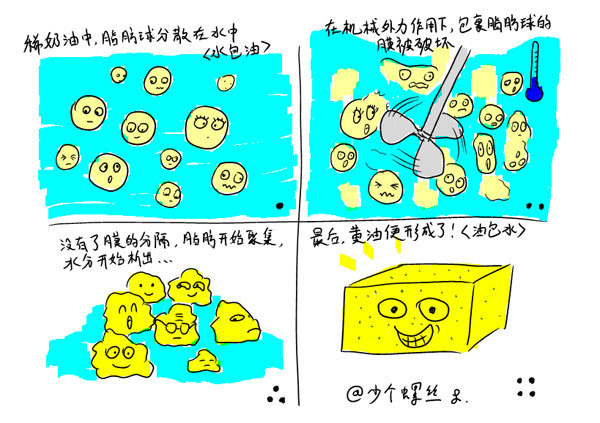
The Process of Light Cream Turning into Butter
Light cream contains about 40% fat and about 60% water, and these fats are also dispersed in the water in the form of fat globules. The fat globules are separated by the outer membrane, so they cannot aggregate with each other. The fat globules are surrounded by continuous water. So we say this is water-in-oil. At this time, if we apply a mechanical force to the light cream to break the membrane surrounding the fat globules, we can allow the originally isolated fat globules to unite. If we maintain a lower temperature at the same time to allow the fat to solidify (the solidification point of milk fat is around 30 degrees Celsius), the excess water will separate from the fat. The slowly solidified small fat particles stick together to form a large mass. At this time, the remaining small amount of water is dispersed in the fat in the form of small droplets, and the water-in-oil situation is reversed to oil-in-water, and the light cream becomes butter.
In the actual production process, the light cream is usually pasteurized first. On the one hand, this kills microorganisms and ensures uniform product quality; on the other hand, it can also inactivate lipases and oxidoreductases, thereby limiting their decomposition and oxidation of milk fat. Then, specific lactic acid bacteria are inoculated into the light cream to ferment and produce the unique flavor substances of butter. After that, the light cream is vigorously churned to complete the phase inversion from water-in-oil to oil-in-water. Finally, slow and gentle stirring is used to turn the unformed butter lumps into uniform butter. In this last step, salt can be added to produce salted or semi-salted butter. Usually, 20 liters of whole milk (only using the fat component) are needed to produce 1 kilogram of butter.
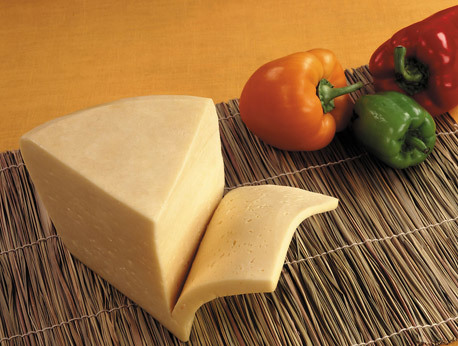
Butter is delicious, but don't overeat it.
Butter is delicious; there is even an old French saying, "Without butter, it's not a great meal." Butter can be spread directly on bread, used to cook other foods, and used to make cakes and cookies. Butter is more than 80% fat, less than 16% water, and the rest is residual protein, carbohydrates, minerals, and vitamins. Butter is high in calories; 100 grams of butter contains 3136 kilojoules (750 kilocalories), which is much higher than the calories in chocolate (100 grams of dark chocolate contains about 2200 kilojoules). You may not know that in addition to providing the body with more calories, butter is also rich in fat-soluble vitamins (vitamins A, D, E, and K), especially vitamin A. Eating 10 grams of butter can provide 8% of the daily recommended intake of vitamin A for the human body.
However, butter also contains high cholesterol, with 240-280 mg of cholesterol per 100g, so it is considered one of the foods that can cause cardiovascular diseases and other health problems. Therefore, people with high blood lipids should eat less butter. However, for people with normal lipid metabolism, moderate consumption of butter will not harm the body. Since the vitamins in butter are easily destroyed at high temperatures, it is best to spread butter directly on bread and eat it raw. Although butter is also a dairy product, it only contains trace amounts of lactose, so even people with lactose intolerance will not experience discomfort when eating butter.
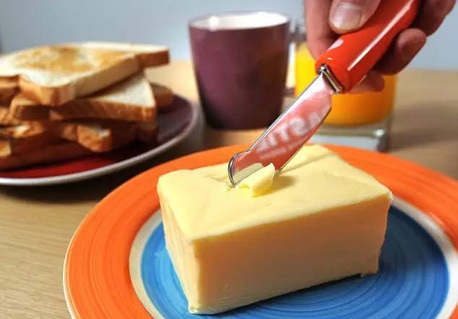
So, if you eat a little butter every day, won't a whole block go bad before you can finish it? Don't worry about that. The main component of butter is fat, and microorganisms cannot survive and reproduce on it. The only thing to watch out for is fat oxidation and hydrolysis. If the storage temperature is too high or the packaging is not tight, fatty acid oxidation or hydrolysis may produce some volatile ketones and aldehydes, causing the butter to have an unpleasant odor. Therefore, each time you eat, only open the amount you need, and remember to wrap it up and put it back in the refrigerator afterward. Also, if you buy too much, you can freeze the butter. When you need to eat it, remember to put it back in the refrigerator to thaw five or six hours in advance.
Latest developments

WeChat Public Number
Shandong Yihao Food Co., Ltd
Telephone:86-531-86933666
Fax:86-531-86937666
Mailbox:yihaoyouzhi@163.com
Website:www.yihaoyouzhi.com
Address: Daqiao Economic Development Zone, Tianqiao District, Jinan City (Yihao Food Industrial Park)