
Yihao Classroom
Danish Pastry | A Different Kind of Danish Pastry
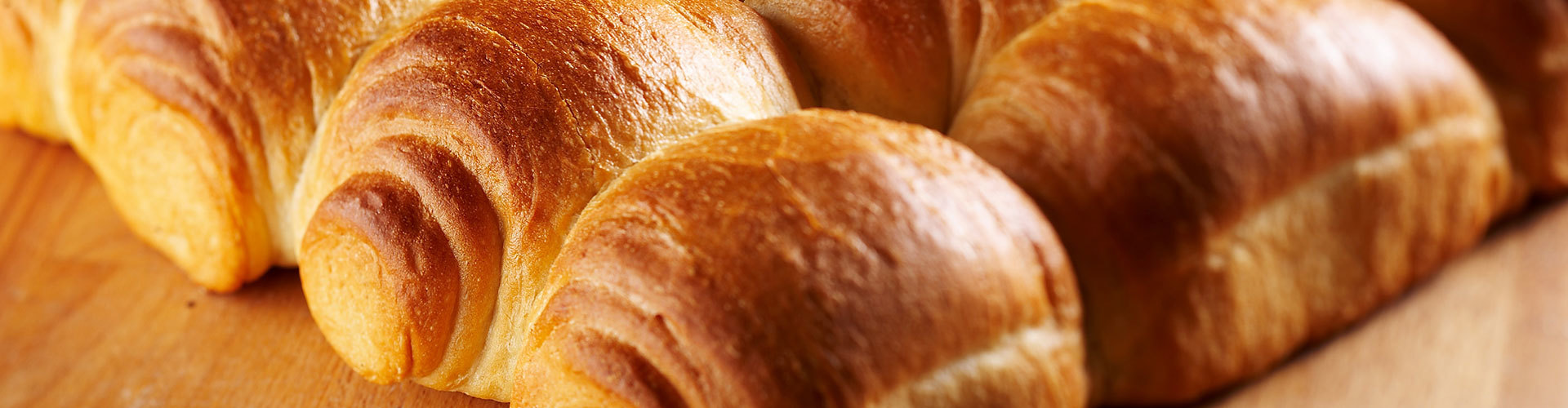
Speaking of croissants, I can't help but drool. That combination of crisp and soft texture is simply delightful. The most common ones we see are croissants, pain au chocolat, and pull-apart bread. Many people know they are puff pastries, but they actually have another name - Danish pastries.
Danish pastries are a familiar type of fluffy bread, but truly good ones are rare. This is because there are many things to pay attention to when making Danish pastries, and it's also very time-consuming and energy-intensive. Therefore, it usually needs to be made 1-2 days in advance. Before making Danish pastries, we must first understand Danish pastries.
DanishBread
Understanding Danish pastries from each country
A title
01
Among the numerous types of Western pastries, Danish pastries are indeed rare in their diversity. This is because there are many factors that influence the product, including differences in the proportions of the main ingredients such as flour, incorporated fat, granulated sugar, eggs, and milk, as well as differences in various production methods.
However, the basic production methods and principles are not complicated. As long as you develop products with outstanding flavors that suit consumers based on the basic production methods, that's sufficient.
Danish pastries can be broadly classified into three categories: European Danish pastries, American Danish pastries, and Japanese Danish pastries. Because different countries have different flavors, raw material conditions, and market situations, the proportions of ingredients and production methods will also vary, resulting in various flavors and shapes of Danish pastries.
Different ingredient ratios can result in different product characteristics. Generally, small and medium-sized bakeries mostly use European-style Danish pastries, while large-scale manufacturers mostly use American-style Danish pastries. Generally, American dough has more sugar and less fat, the dough texture is very soft, and after sufficient fermentation and baking, the layers are not so obvious, and the volume is larger, just like sweet bread.
In contrast, European dough has more fat, and the layers after baking are as clear and distinct as a pie, so the crisp and flaky texture is one of its main characteristics. This dough will absorb more water than pie dough and is harder and firmer than American Danish dough. Due to the higher fat content in the dough, the dough temperature should be lower during operation, and the operating temperature is lower than that of American Danish dough.
Although they are both European-style Danish doughs, they are also divided into Viennese dough, German dough, French dough, Austrian dough, etc., each with its unique flavor. With the variations in fillings and baking methods, the variety is naturally very extensive.
DanishBread
Danish Pastry Recipe
3 types
02
European Danish Dough
As mentioned earlier, European Danish pastries have different national recipes and differences in high or low ingredients. Here, we will introduce the most basic high-ingredient Danish recipe.
FORMULA
European Danish Dough Recipe
High-gluten flour 60%~65%
Low-gluten flour 35%~45%
Granulated sugar 7%
Whole egg 25%~26%
Milk 35%
Yihao flaky puff pastry oil 100%
Butter 6%
Dry yeast 2%
Salt 1%
American Danish Dough
Compared with European Danish pastries, American Danish pastries have less incorporated fat and do not pay as much attention to layering. Therefore, the focus of production is on the flavor and volume of the bread created by fermentation. When mixing, the dough should be thoroughly mixed according to the recipe ingredients to extend the gluten. It is a dough that is closer to sweet bread.
FORMULA
American Danish Dough
High-gluten flour 70%
Low-gluten flour 30%
Granulated sugar 18%
Whole egg 10%
Water 42% Milk powder 20%
Yihao flaky puff pastry oil 45%
Butter 12%
Dry yeast 2% Salt 1%
Japanese Improved Danish Pastry
If American or European dough and products are directly introduced into other national markets, there will certainly be questions, mainly because there are differences in national tastes and preferences, and the raw material conditions also vary between countries.
Japanese Danish pastries cleverly select the advantages of American and European Danish pastries based on their different properties. The Japanese add a lot of sugar, oil, eggs, and milk to the Danish pastry recipe, resulting in significant differences in appearance, color, and texture compared to American and European Danish pastries.
American and European Danish pastries are mostly golden yellow after baking, while Japanese Danish pastries turn reddish-brown after baking due to the addition of a large amount of sugar and oil. Due to the high sugar and oil content in the recipe, the operating temperature is also very high, generally controlled below 25℃, so it is not suitable for making small breads of about 60g, mostly making breads of 200g or more.
FORMULA
Japanese Improved Danish Pastry
High-gluten flour 80%
Low-gluten flour 20%
Granulated sugar 18%
Whole egg 17%
Sweetened condensed milk 6% Milk 42%
Yihao flaky sweet cream 45%
Butter 10%
Dry yeast 2% Salt 1%
Alright, after reading this, you have the recipes and the practical information!
Latest developments

WeChat Public Number
Shandong Yihao Food Co., Ltd
Telephone:86-531-86933666
Fax:86-531-86937666
Mailbox:yihaoyouzhi@163.com
Website:www.yihaoyouzhi.com
Address: Daqiao Economic Development Zone, Tianqiao District, Jinan City (Yihao Food Industrial Park)